What is a backyard ultra: format, history and records
What a backyard ultra is and how the last one standing format works: where it comes from, how you win it and the world records in loops.
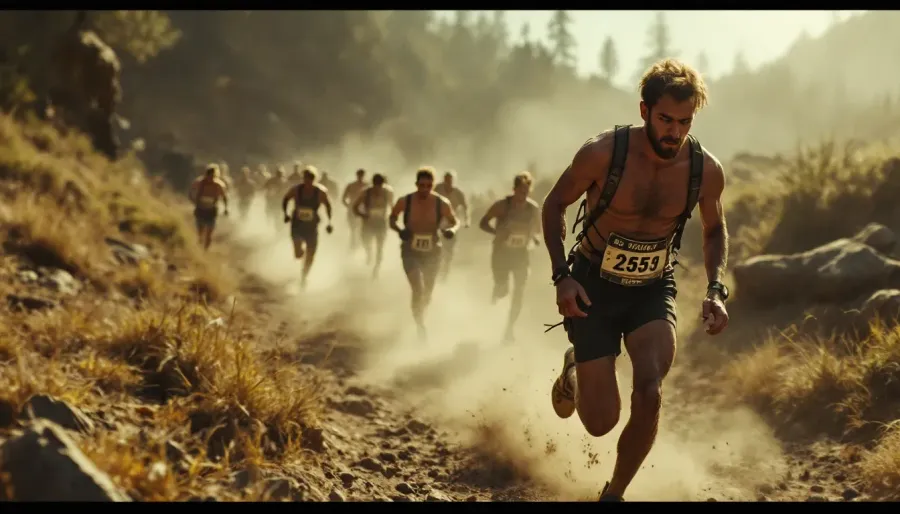
A backyard ultra is an ultra-distance race with no fixed distance: every hour, on the hour, a bell rings and all the runners set off to complete a loop of 6.706 km. Anyone who does not finish the loop within the hour, or does not turn up for the next start, is eliminated. The race does not end until only one person is left able to head out for one more loop: that is why the format is called last one standing.
It is the only format in running where, when you sign up, you do not know how far you are going to run. Neither you nor the organisers: the duration is decided by the second-to-last runner to drop out.
The rules, in short
The rulebook fits on a napkin, and that is the beauty of it. Here are the essentials; the official rulebook, rule by rule and with what each race adds, is in the backyard ultra rules:
- One loop per hour. The start is every 60 exact minutes, everyone together. You cannot start early or bank loops: finishing early does not move you ahead, it only gives you more rest.
- 6.706 km per loop. The figure is no accident: 24 loops add up to exactly 100 miles. If you want to understand where it comes from, we explain it in what yards are.
- The warning and the start corral. There is a warning at 3, 2 and 1 minute to go, by whistle or over the PA, and the bell marks the start. Anyone who is not inside the start corral when it rings is out. There is no grace period: it is the rule that eliminates the most people through carelessness, not tiredness.
- The time left over is yours. If you finish the loop in 45 minutes, you have 15 to eat, change or sit down. The faster you run, the more you rest… and the more you wear yourself down. That balance is the whole strategy of the format, and we go into it in pace and rest.
- Nobody goes with you on the loop. The rules forbid outside help and accompaniment on the course: only runners in competition can be on the circuit. Support is given in the crew area (the camp), between one loop and the next. There are no pacers, no hares, nobody bringing you water halfway round the loop.
- Only one person finishes the race: the winner. In the official result, the winner is the only finisher and everyone else is listed as «did not finish» (DNF), whether they ran 30 km or 300; what stands as their mark is their number of completed loops. If that bookkeeping surprises you, we explain it in what happens when you are eliminated.
- The assist. There is special recognition for the last rival to drop out, the one who completed one loop fewer than the winner: they are the one who forces the winner to keep heading out until the end, because with nobody left to race the race is over. In a backyard, the runner-up is not a loser: they are the reason a record exists.
The rule almost nobody mentions
If two runners set off on the final loop and neither finishes it, the race closes with no winner: everyone DNF. It rarely happens, but it is in the rules, and it explains why the format rewards finishing the loop over holding out sitting down until the end.
Where the format comes from
The backyard was invented by Lazarus Lake, the same creator as the Barkley Marathons. The first edition was run on his property in Bell Buckle (Tennessee) and was named Big’s Backyard Ultra in honour of his dog, Big. That is where the format’s name comes from: it was run, literally, in his backyard.
What began as a local oddity is today a worldwide circuit with a team world championship and qualifiers in dozens of countries, Spain included. The Tennessee venue is still the mecca of the format, and the system of places (the bronze, silver and gold tickets) is what connects a village race with Bell Buckle: we break it down in golden ticket and silver ticket.
How far it has gone: the records
The ceiling of the format keeps rising. The men’s world record is 124 loops (about 831 km, more than five days of running) and it is shared by the Belgians Ivo Steyaert and Merijn Geerts, who closed loop 124 together at the World Team Championship in October 2026 and neither of them started the next one. They went beyond the 119 loops of the Australian Phil Gore at Dead Cow Gully (Australia), in June 2025. The women’s record belongs to Britain’s Sarah Perry: 95 loops (about 637 km) at the 2025 individual world championship.
To put it in perspective: 124 loops are more than five days of heading out to run every hour, with no sleep beyond snatches between one loop and the next.
And the format already has its own experimental frontier outside competition: in 2026, Gore attempted 168 loops solo and unsupported (a whole week) and stopped at 152. We tell the story in Project 168.
How it is run in Spain
Spain has its own calendar, a national championship and races with a qualifying ticket for Big’s. There are all kinds: flat asphalt circuits, dirt loops with plenty of climbing and village races with a hundred participants and a loudspeaker.
If you want to see the whole picture, we have the up-to-date race calendar and the directory of every backyard in the archive with the record of each race. For the context of how the format has grown here, there is the backyard ultra in Spain; and to see how one plays out for real, the Haciendo Sed Burgos 2026 race report.
The international calendar is set by the World Team Championship, which is run simultaneously in every participating country: how that unusual format works is in the World Team Championship.
Why it is so addictive
The backyard turns the logic of normal races upside down. You do not compete against the clock, but against the idea of giving up. The pace required is within reach of almost any distance runner (one loop per hour is fast walking with stretches of jogging), so the barrier to entry is low and the ceiling, infinite: your race lasts exactly as long as you hold out, no more and no less.
That makes it the most democratic and at the same time the cruellest format in ultrarunning: a recreational runner and the world champion set off together on every loop, and neither of them knows when their race will end. It is, as the format’s Spanish federation sums it up, the only foot-racing discipline in which the most resilient wins, not the fastest.
How it differs from other ultras
| Backyard ultra | Distance ultra (100 km, 100 miles) | 24 hours on a track | |
|---|---|---|---|
| What is measured | loops completed | time to cover the distance | distance in 24 h |
| When you finish | when you fail or win | when you cross the finish line | when the time is up |
| Pace | set by the hour | you choose it | you choose it |
| Rest | compulsory and measured | optional, it costs you | optional, it costs you |
The comparison with the most similar format (the 24 hours) has its own guide: backyard ultra or 24 hours. The practical difference is that in a backyard rest is not a loss, it is part of the rules: that is why it rewards whoever manages it well and not whoever runs the most.
What you need for your first one
Less than it seems, but different from what you take to a normal race:
- A sustainable pace, calculated, not guessed. It is the first thing to set, and the pace calculator gives you the loop time and the rest you have left for each pace.
- A camp set up: chair, food in portions, dry clothes and a head torch. The minimum list fits in a box.
- A food plan by loops, written before you start. The outline is in eating and drinking between loops.
- Someone to support you, if you can: the crew saves you minutes of rest on every loop and decisions when you are no longer thinking straight.
How to get started
If the format calls to you, you do not need to be an ultrarunner to try it: you need a plan. Start by working out which pace leaves you enough rest with the pace calculator, choose the race well with how to choose your first backyard and carry on with the guide to preparing your first backyard in 12 weeks. And before you line up at the start, go over the typical first-timer mistakes: almost all of them can be avoided from the sofa.
Frequently asked questions
What is a backyard ultra?
It is an ultra-distance race with no fixed distance: every hour, on the hour, all the runners set off to complete a 6.706 km loop. Anyone who does not finish the loop in time or does not start the next one is eliminated. The winner is the last person able to complete one more loop than everyone else.
How many kilometres is a backyard ultra?
There is no fixed distance. Each loop measures 6.706 km, so 24 loops (one day) equal 100 miles (160.9 km). The race lasts as long as the last runner holds out: the big international events go beyond three days in a row.
What is the backyard ultra world record?
The men's record is 124 loops (about 831 km), shared by the Belgians Ivo Steyaert and Merijn Geerts at the 2026 World Team Championship. The women's record belongs to Sarah Perry (United Kingdom), with 95 loops (about 637 km) at the 2025 individual world championship.
Who invented the backyard ultra?
Lazarus Lake, the creator of the Barkley Marathons. The first backyard was run on his property in Bell Buckle (Tennessee) and it is called Big's Backyard Ultra in honour of his dog, Big.
How long does a backyard ultra last?
As long as the second-to-last runner holds out. A grassroots race can be decided in 15 or 20 hours and an international-level one can go beyond three days. When you sign up you do not know whether you will run for six hours or two days: it is the only race where the duration is not in the rules.
Do you have to be an ultrarunner to run a backyard ultra?
No. The pace of a loop is within reach of any distance runner (fast walking with stretches of jogging is enough to close it within the hour), so the barrier to entry is low. What decides how many loops you last is not speed but how you manage rest, food and your head.
Can someone go with you while you run the loop?
No. The rules forbid outside help and accompaniment on the course: only runners in competition can be on the loop. All support (food, drink, clothing, encouragement) is given in the crew area, between one loop and the next.
Backyards on the calendar
Races on record in Spain, with their history of editions and upcoming dates.
- Backyard Costa Brava Palamós · Girona
- Backyard Haciendo Sed Burgos · Burgos
- Backyard L'Espaseta Bellpuig · Lleida
- Backyard MGI Ronda · Málaga
- Backyard Tarragona · Tarragona
- Backyard Ultra Almaraz Energía Infinita · Cáceres
Full directory of backyards →Backyard ultra calendar for Spain →
Related guides
What if you prepared for it with a tailored plan?
We adapt the content of this guide to your race, your level and your schedule.